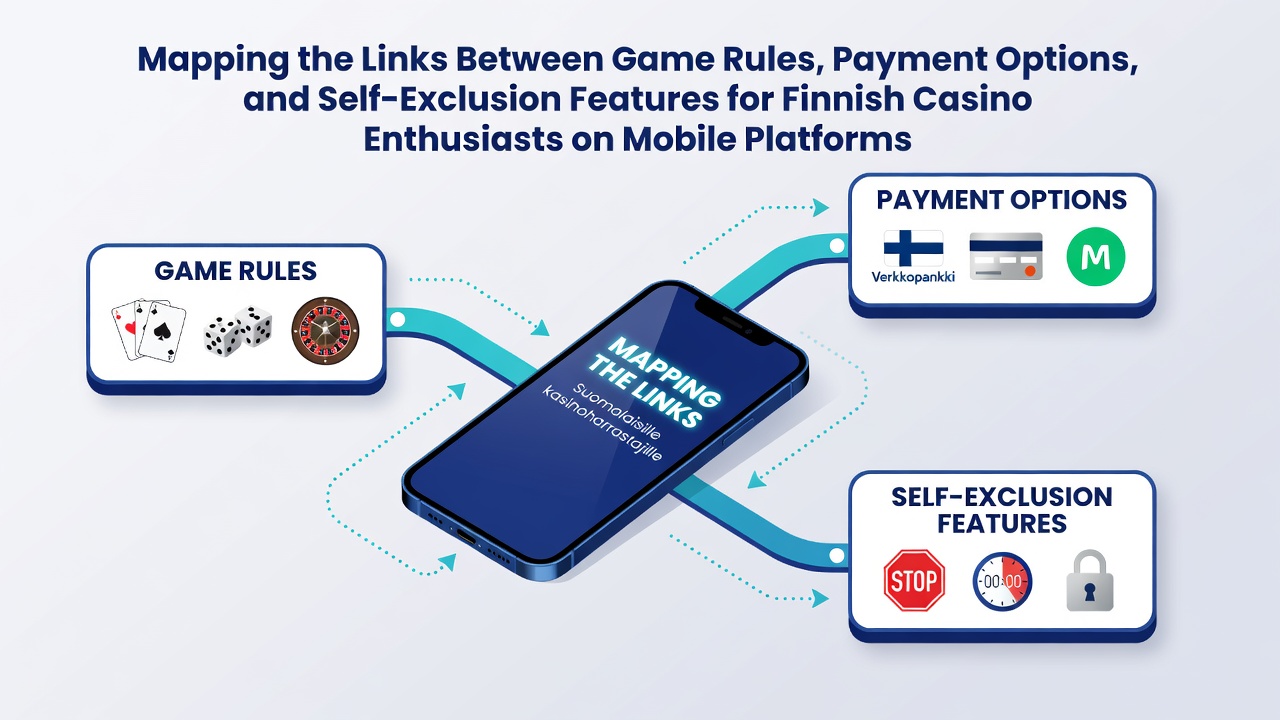
Mapping the Links Between Game Rules, Payment Options, and Self-Exclusion Features for Finnish Casino Enthusiasts on Mobile Platforms
Game rules in mobile casino applications establish specific parameters for wagering limits, bonus structures, and session durations that directly shape how Finnish users select payment methods and engage with self-exclusion tools. These interconnections become particularly evident when examining mobile platforms where real-time rule adjustments influence transaction processing speeds and exclusion activation timelines. Observers note that Finnish enthusiasts often navigate these elements through apps that integrate regulatory requirements from multiple jurisdictions, creating layered decision points at each stage of play.
Game Rules as the Foundation for Payment Integration
Rules governing minimum bets, maximum payouts, and game-specific multipliers set the stage for compatible payment options on mobile devices. For instance, slots with progressive jackpots frequently require payment methods that support larger, instantaneous transfers, while table games with slower pacing align with options that permit scheduled deposits. Data from industry reports shows that Finnish users on mobile platforms encounter these rule-payment alignments through interfaces that display rule summaries alongside available transaction channels. Researchers at the Australian Gambling Research Centre have documented similar patterns across European markets, where game mechanics dictate the viability of certain e-wallets or bank transfers during active sessions.
Payment providers adapt their services to accommodate these rules by offering features like instant verification for high-volatility games or delayed processing for low-stakes environments. This adaptation ensures that Finnish casino enthusiasts maintain compliance with platform-specific guidelines while managing funds on the go. Those who study mobile gambling behaviors find that mismatches between game rules and payment capabilities lead users to switch methods mid-session, a process streamlined through in-app toggles that reflect current regulatory standards projected for updates around August 2026.
Self-Exclusion Mechanisms Tied to Transaction Flows
Self-exclusion features on mobile platforms connect directly to payment systems through automated blocks that activate upon enrollment, preventing further deposits tied to specific game categories. Finnish users benefit from tools that link exclusion periods to individual game rules, such as suspending access to high-stakes roulette variants while allowing limited slot play under controlled parameters. Evidence from regulatory analyses indicates these linkages reduce unauthorized transactions by integrating exclusion databases with payment gateways in real time.
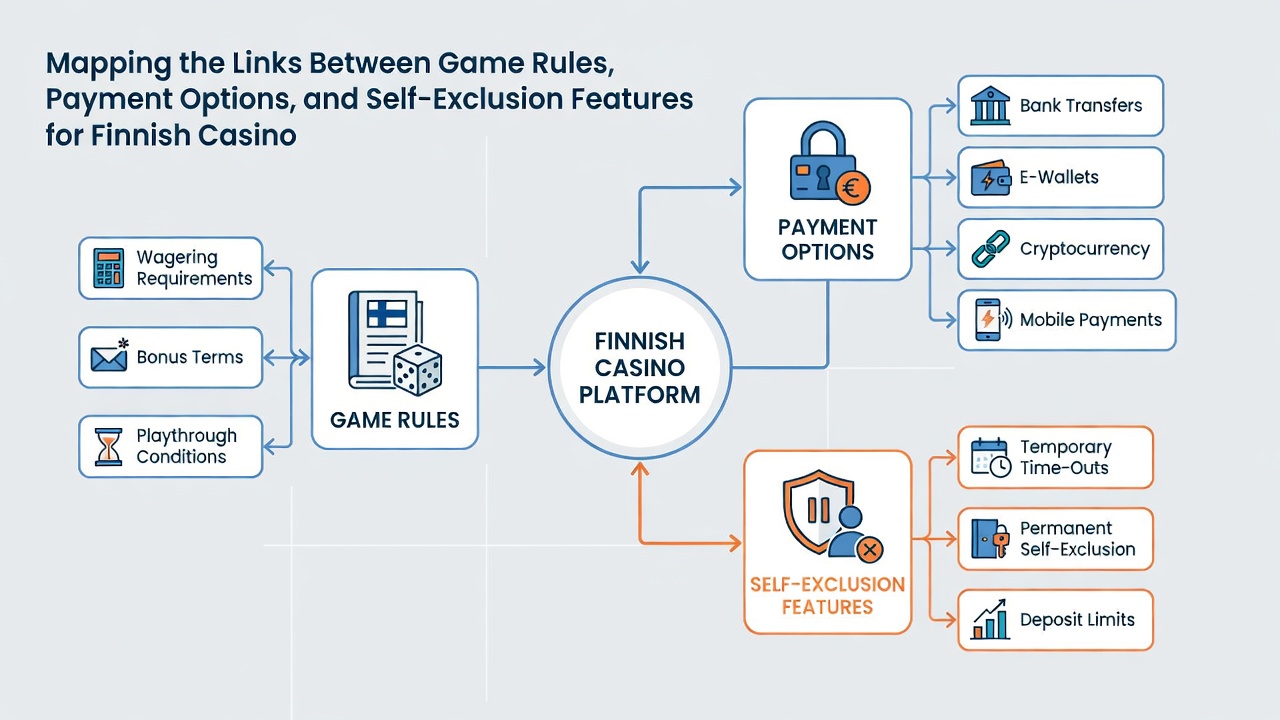
One study revealed that payment options supporting recurring transfers often include built-in exclusion flags that sync with game rule engines, allowing users to exclude themselves from particular titles without disrupting overall account access. Canadian researchers from the Centre for Addiction and Mental Health have examined comparable systems, noting how mobile architectures facilitate granular controls that align exclusion durations with payment verification cycles. This setup proves useful for enthusiasts who seek temporary pauses tied to specific rule sets rather than blanket account restrictions.
Regulatory Context and Mobile Platform Adaptations
Finnish regulatory frameworks emphasize responsible play features that require mobile operators to map game rules onto payment and exclusion pathways. These mappings ensure that self-exclusion requests trigger immediate payment halts for affected game types, with data logs maintained for compliance verification. According to figures from the European Gaming and Betting Association, such integrations have expanded across Nordic markets as platforms update their mobile interfaces to handle complex rule-based exclusions.
Payment options like prepaid cards and digital wallets now incorporate rule-detection algorithms that flag transactions against active self-exclusion lists. This technology allows Finnish users to receive alerts when a selected method conflicts with their exclusion settings, prompting adjustments before funds process. Observers note the efficiency of these systems in August 2026 projections, where enhanced API connections between game servers and financial processors promise faster synchronization for mobile sessions.
Practical Examples of Linked Systems in Action
Consider a mobile slot game with escalating bet multipliers that ties its rules to payment providers offering micro-transaction support. When a Finnish enthusiast activates self-exclusion for that title, the platform automatically disables associated payment channels for the exclusion period while leaving other game categories accessible. Take one case documented in academic reviews where users reported seamless transitions between payment methods after exclusion updates, facilitated by rule-embedded coding in the app backend.
Another instance involves live dealer games where session time limits embedded in the rules prompt payment options with time-stamped confirmations. These features help enforce self-exclusion by halting new deposits once limits approach, creating a closed loop between the three elements. Researchers discovered through user surveys that such linkages encourage proactive management of mobile play among Finnish participants who value precise control over their gaming parameters.
Conclusion
The connections between game rules, payment options, and self-exclusion features form an integrated framework on mobile platforms for Finnish casino enthusiasts. These linkages rely on technical adaptations and regulatory alignments that support consistent functionality across devices. Data indicates continued refinement of these systems as platforms prepare for evolving standards in the coming years.